
“Show me the incentives, and I will show you the outcome” – Charlie Munger
Dear Clients and Friends,
Economics is fundamentally the study of incentives; by accurately defining them, one can reliably predict outcomes.
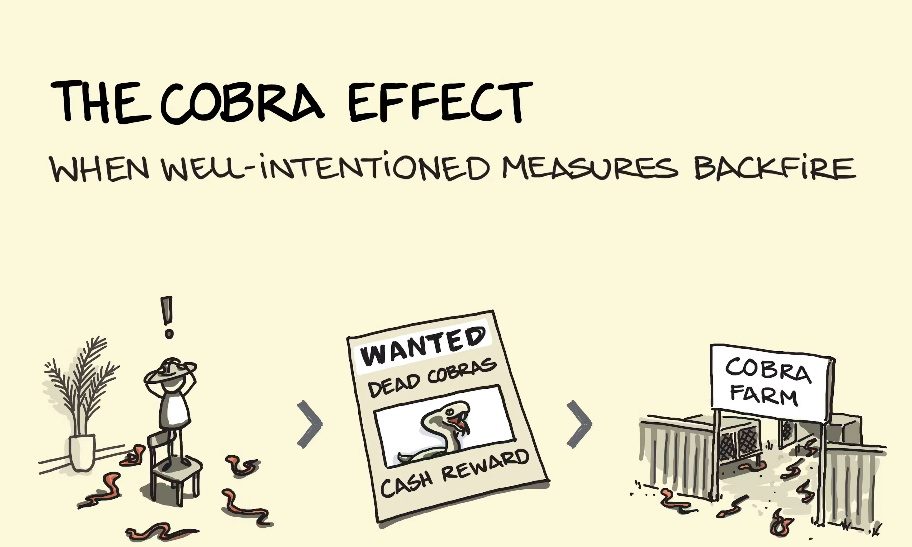
In the 18th century in India, the authorities were troubled by the burgeoning Cobra population in Delhi, so they decided to do something about it. They put a bounty on dead Cobras, which lead to the locals breeding Cobras to collect the reward. In short order the authorities canceled the bounty, so the ‘cobra dealers’ decided to release their cobra inventory which caused the Cobra population to skyrocket. Incentives are powerful and can lead to unintended consequences when not thought through in an incentives-based fashion.
If you’ve been following the news, you might have noticed that there are a handful of companies that are spending a lot of money building data centers all over the US. There are myriad estimates of this growth, but suffices to say this buildout could only be described as a “boom”, or some would argue, a “bubble”. If it’s a boom, then we are early and demand will continue to outstrip supply. If it’s a bubble, supply growth will outstrip demand and there will be a bust. Keep in mind that almost all bubbles start as booms that turn into bubbles as legitimate economic incentives turn into outright speculation. The estimates of demand may seem outrageous, but the firms forecasting the demand are the same ones growing the supply, so the incentives for this buildout are partially aligned.
The companies at the heart of this buildout are largely being driven by the promise of Artificial Intelligence (AI); the future of AI will need massive computing power and these data centers are going to be utilized for that purpose. The outcome is a bit less clear because the goal is to make money, and AI is seen as a massive money-making opportunity, but has yet to really produce much of a profit. However, some of the largest companies in our market (Amazon and Meta are good examples) had meteoric rises solely based on a future promise of growth and profitability. I am fairly certain that AI will be a profitable endeavor at some point in the near future.
Now, let’s talk about the outcome, and maybe touch on a few unintended consequences.
AI is a tool, and the use-cases are legion. In fact, the research for this missive was mostly done by working with Gemini — Google’s AI tool. Theoretically, AI could handle lots of simple tasks that are now done by humans, and this is where the ‘AI doomerism’ comes from. Some have argued that AI will take millions of jobs out of the economy within a few short years — the AI ‘Jobpocalyse’. At this point we don’t have a lot of data suggesting this is a likely outcome, but it is possible.
Early indications on AI usage hint at a much more collaborative synergy between man and machine. In order for AI to be used at a large scale we need gigantic data centers that use up lots of electricity. This unquenchable thirst for electrons is starting to steer companies towards large scale power production projects which includes small nuclear reactors. This undoubtedly is an unintended consequence and is likely to lead to a national conversation about nuclear power and the public’s desire to pay escalating electricity bills, where the trade-off will likely be painful - no nuclear, higher utility bills. At some point we will have the discussion about cooling these massive data centers, and that will create a potential fight over water rights and water usage. Noise pollution will also be a problem, as some data centers can be as loud as a rock concert.
The economy is an evolving system, one whereas the incentives change so do the outcomes. The data centers that are currently being built will certainly turn AI into a reality over the next few years. What we do with that tool will largely be a function of how it is used in the economy.
- It could be used to reduce headcount within the labor force, but I think this is manageable, and in some cases desirable.
- It could be used to increase the productivity of processes that exist in both government and business, and this is a likely outcome and also desirable.
The money that has been sunk into the buildout of data centers will be paid back, but it is likely that the payback will come as the gains from efficiency pile up — yet the risk remains that the supply is abundant, and losses are sustained by the investors. In the end, I don’t think AI will lead to a ‘Cobra effect’ within both markets and society, but I think it helps investors to think through the probable vs. possible outcomes.
The opinions voiced in this material are for general information only and are not intended to provide specific advice or recommendations for any individual. All performance referenced is historical and is no guarantee of future results. All investing involves risks including loss of principal. No strategy assures success or protects against losses.
The economic forecasts set forth in this material may not develop as predicted and there can be no guarantee that strategies promoted will be successful.
The information presented is for educational and informational purposes only and is not intended as a recommendation or specific advice. Cryptocurrency and cryptocurrency-related products can be volatile, are highly speculative and involve significant risks including: liquidity, pricing, regulatory, cybersecurity risk, and loss of principal.