
“They Mistook Leverage for Genius” – Steve Eismann
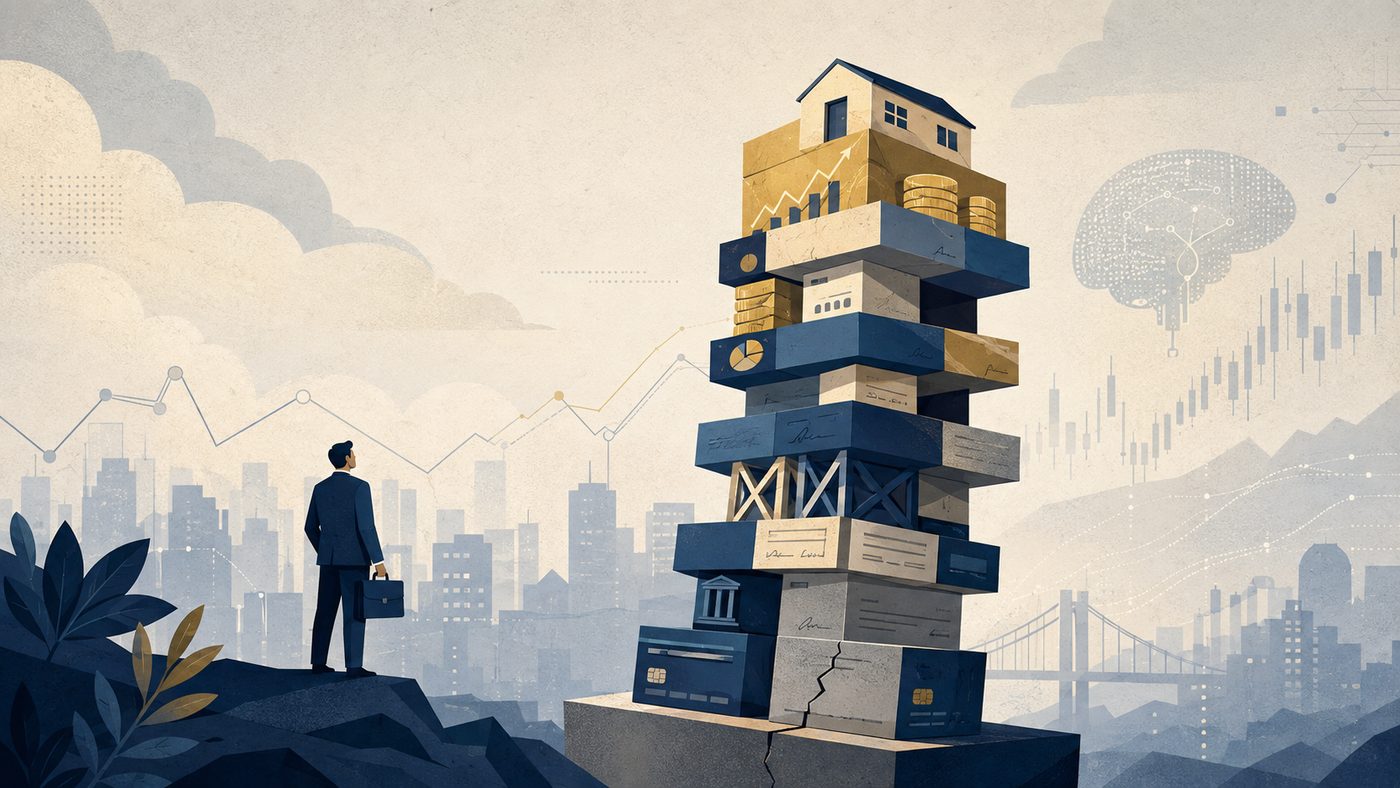
I want the reader to be aware that this missive is not a doomsday prediction, but a survey of risk. If I go back 15 years and remember my conversations about risk with clients, I can attest that many who lived through the ’08 crises had a visceral response to the subject. Today, we have a whole new generation of market participants that don’t seem to fully appreciate the dangers of leverage, and my goal is to highlight that risk and how it relates to today’s market.
Leverage is the financial term for the borrowed money that is used to buy an asset. If you buy a house with a mortgage, you are using leverage (the mortgage) to acquire a home and will likely benefit from the growth in home equity. If you take out student loans, you are using leverage to heighten your skillset and hopefully make more money. Leverage, when used judiciously, can be a powerful tool; and just because the price (interest rate) we pay for leverage might be low, it doesn’t mean the tool isn’t dangerous. The ‘magic’ of leverage can best be seen in this example: you borrow $99 dollars and use $1 of your own cash to purchase a $100 asset. That asset then goes up 20%, but YOUR cash return is 1,900% (it took you $1 dollar to make $20) - and that is as close to magic as you can get in financial terms. But I will warn the reader: when you borrow too much against an asset and that asset goes down in value, the result can be total loss – see 2008 financial crash. When you read about financial crises of the past, it is almost impossible to ignore the central role of over-leveraged participants.
When Steve Eismann decided to bet against the housing market in 2006, he saw something that looked so obvious that he had real doubts about its validity. He saw that the entire banking system was highly leveraged and they had ‘bet the farm’ on a housing market that was starting to crack. What seemed implausible to him was the fact that you could buy insurance on the system for virtually nothing (like buying fire insurance on a house that was burning), and if things crashed the payoff was 60-80x the investment. The mere fact that no one priced this risk correctly should tell you something about the problem - a crisis is typically preceded by a euphoric belief that nothing can go wrong. I will attest that nothing this extreme is happening today, but there are some similarities.
Currently we have investment funds in our markets that take highly volatile stocks and leverage the return 2 and 3x for any given day. The leverage is built into the fund, and many investors don’t have the faintest idea what that means. But they see the fund go up, and they buy. Some in the financial industry have an invested interest in these funds as they create and market leveraged vehicles, so they are motivated to sell these funds. Others, like myself think these are garbage and play no role for a long-term investor. Very few in our industry make the time to preach to the masses that these investments are not appropriate for most investors. As Zeke Faux in his book, Number Go Up wrote, “Bees don’t waste their time telling flies that honey is better than sh%t”.
Today, the leverage is not in the banking industry, but in the government debt and consumer credit space. How this ends for the government is hard to predict, but how it ends for consumers is a bit easier to forecast. As long as the consumer has a job and steady income, the consumer debt will be serviced, but when the job market turns south the debt will be problematic. The job market is key, and for some time we have had a ‘low fire, low hire’ job market that has kept a lot of young people out of the job market.
This is a smoldering problem, it doesn’t rise to the level of crises, but it needs to fix itself in the coming years. The other problem is more existential and could best be described as “AI taking all of our jobs”. I don’t foresee this as a legitimate outcome based upon the data, but the risk remains. Either way, leverage could play a role in our economy in the not-too-distant future if either of these risks become more extreme. To all those who use leverage and make phenomenal returns, should they ask themselves, “Am I just that good?” The answer is “probably not”, just luck mixed with leverage – the story ends when the luck runs out and the leverage comes due.
Securities and advisory services offered through LPL Financial, a registered investment advisor. Member FINRA/SIPC. The opinions voiced in this material are for general information only and are not intended to provide specific advice or recommendations for any individual. All performance referenced is historical and is no guarantee of future results. No strategy assures success or protects against loss. This information is not intended to be a substitute for specific individualized tax or legal advice. We suggest that you discuss your specific situation with a qualified tax or legal advisor. Stock investing includes risks, including fluctuating prices and loss of principal. Bonds are subject to market and interest rate risk if sold prior to maturity.
The opinions voiced in this material are for general information only and are not intended to provide specific advice or recommendations for any individual. All performance referenced is historical and is no guarantee of future results. All investing involves risks including loss of principal. No strategy assures success or protects against losses.
The economic forecasts set forth in this material may not develop as predicted and there can be no guarantee that strategies promoted will be successful.
The information presented is for educational and informational purposes only and is not intended as a recommendation or specific advice. Cryptocurrency and cryptocurrency-related products can be volatile, are highly speculative and involve significant risks including: liquidity, pricing, regulatory, cybersecurity risk, and loss of principal.